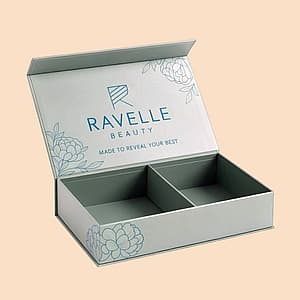
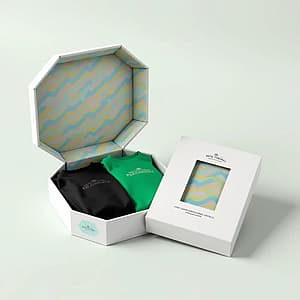
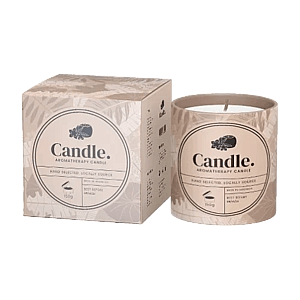
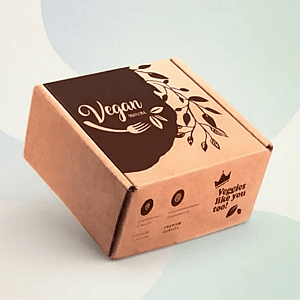
A slide box is a two-piece rigid package built from an outer sleeve and an
inner tray. The tray slides out sideways, so your customer watches the product
reveal itself rather than lifting a lid off. That one mechanical difference is
why brands move up to custom slide boxes when the product is worth more than
the packaging costs to protect — a fragrance, a watch, a candle set, a
skincare gift kit.
You'll also see this structure called a sliding box, a drawer box, a pull-out
box, or a match-style box. Different names, identical engineering. If a supplier
tells you they "don't make slide boxes" but they do rigid drawer boxes, they're
talking about your box.
How a Slide Box Actually Works
Two parts. The sleeve is the presentation half — it wraps
three or four sides, carries your artwork, and stays open at the pull end so the
tray has somewhere to go. The tray is the structural half — it's
sized to your product with just enough clearance for the sleeve to travel
smoothly, but not so much that the box rattles in transit.
Get the clearance wrong and you'll hear about it. Too tight and the tray
binds, which is where "my customers ripped the box open trying to get to it"
complaints come from. Too loose and the whole thing feels cheap in the hand.
We build in roughly a 0.5–1mm tolerance gap so the slide works whether it
ships from a dry warehouse in Texas or sits on a humid retail counter in
Florida.
That's the part nobody puts on a spec sheet, and it's the part your customer
actually feels.
Slide Box, Drawer Box, or Slipcase: What's the Difference?
They're all sleeve-and-tray builds. The difference is which ends are closed
and whether the tray can stand on its own.
| Structure | Open Ends | Best For | Note |
|---|
| Standard slide box | One | Jewelry, candles, cosmetics, small electronics | The workhorse. Cheapest of the rigid options. |
| Match-style / two-way slide box | Both | Flat items, business card sets, phone accessories, small gifts | Push it out from either end. No pull needed. |
| Drawer box | One | Premium retail, counter display, prestige gift sets | Deeper rigid tray that displays on its own once the sleeve lifts off. |
| Slipcase | One | Books, board games, software, media | Literally a slipcase. Thinner board, document-weight contents. |
| Rigid lid-and-base box | Lid lifts off | Watches, premium spirits, heritage goods | Different format. Faster opening, less ceremony. |
Rule of thumb: if the reveal is the selling point, slide box. If the product
sits on a counter and the box is a display piece, drawer box.
What Custom Slide Boxes Are Made From
Slide boxes come in two material families, and picking the wrong one is the
most expensive mistake buyers make.
Rigid Chipboard and Greyboard
The premium build. Thick greyboard core — we run 1.5mm to 2.5mm — wrapped in
printed or textured paper. Ships fully assembled, doesn't fold flat, and costs
the most to ship to you because of the air inside it. In exchange you get crush
resistance, a re-close function, and a box the customer can reuse.
Kraft Paperboard
Same rigid core, wrapped in unbleached brown or matte black kraft. The
natural, eco-conscious look. Keep the artwork simple — kraft takes ink less
cleanly than white board, and a busy full-colour design on kraft will look
muddy. Best with a single-colour logo and one foil hit.
SBS C1S and C2S Paperboard
The budget route. 400–600gsm coated white board, die-cut and folded rather
than rigid-wrapped. Prints beautifully, costs a lot less, ships flat to cut your
inbound freight. You give up the "rigid" feel and some crush protection. Right
call for cosmetics, apparel, and gift-with-purchase.
Wrap Papers
On any rigid build, the wrap is where the customer sees quality. Available:
128gsm and 157gsm art paper, textured linen, leatherette, soft-touch, black
spectrum, metallic, holographic, and uncoated stock with a natural tooth. Ask
for swatches — texture photographs badly and a linen wrap in person sells
itself.
Types of Slide Boxes We Build
Classic One-Way Slide Box
Open at one end, closed at the other. Ribbon pull, thumb notch, or push
hole. This is the default and it's the right default.
Two-Way Match-Style Box
Open at both ends, like an oversized matchbox. No pull hardware needed
because the customer pushes the tray out from whichever side is closer. Very
common for USB drives, phone accessories, and flat jewelry.
Magnetic Slide Box
Tray and sleeve each carry a concealed magnet. It closes properly, which
matters if the box ships to a customer who'll re-seal it. Costs more, adds
weight, and you need to test it — a magnet set too strong gives you a box
customers can't open without a fingernail.
Split or Double-Drawer Box
Two sleeves entering the same tray from opposite ends, or two stacked trays.
Strong choice for product sets and subscription kits where you want a reveal
per compartment instead of one big reveal.
Collapsible (Knock-Down) Slide Box
Rigid feel, folds flat for shipping, pops up in seconds. Solves the biggest
practical complaint about rigid packaging: warehouse space. Slightly more
assembly time on your end and a small cost premium.
Window Slide Box
Die-cut clear PVC or acetate window in the sleeve so the product shows before
the box opens. Works well for candles and cosmetics where colour and product
recognition sell it. Ask for a printed or frosted window rather than a bare one.
Print, Finishes, and Inserts
Printing
Full-colour CMYK offset or digital, Pantone solid inks for brand colour
matching, screen printing for short runs, and no printing at all for
kraft. We can print the inside of both sleeve and tray — that hidden message
under the product is one of the cheapest unboxing upgrades available.
Finishing
Matte lamination, gloss, soft-touch velvet matte, and anti-scratch matte for
products that scuff. On top of that: hot foil stamping in gold, silver, rose
gold, or holographic, blind and registered embossing, debossing, and spot UV
to make a logo catch light as the tray slides out. Pick one hero finish. Two
competing effects on the same panel look cheap.
Inserts
Cardboard die-cut for the sustainable, low-cost, fully recyclable option.
EVA foam for dense, shock-resistant cavities and the best surface for
jewellery. EPE and XPE foam for lighter protection. Molded pulp for shaped
fibre protection that prints and composts. Satin or velvet lining for
presentation. Send a dimensioned sample or CAD file and we'll cut the cavity to
fit — a loose insert is worse than none because the product moves.
What Products Work Best in Slide Boxes
Slide boxes earn their cost on small, high-perceived-value, easily damaged
goods. They are not the right call for heavy, low-margin, or bulky items — the
board-to-product ratio gets expensive fast.
- Jewelry and watches — rings, earrings, pendants, watch sets. The classic slide box use case.
- Perfume and cosmetics — fragrance, skincare sets, makeup kits, serum gift sets.
- Candles — glass and wax, especially in a rigid tray that protects the pour and looks good on a shelf.
- Premium electronics — earbuds, chargers, cables, smart home accessories, small devices.
- Gift and subscription sets — multi-item kits where a split drawer gives you a reveal per item.
- Apparel accessories — belts, wallets, sunglasses, small leather goods.
- CBD and specialty products — where a rigid, opaque, child-resistant presentation matters.
- Corporate and promotional — welcome kits, client gifts, conference handouts.
Rigid boxes cover the lid-and-base
format if the reveal isn't your priority. If your product is light and you'd
rather save the money,
folding cartons will do the same
job for a fraction of the cost. Related:
tuck boxes,
two-piece boxes, and
kraft boxes.
How to Order Custom Slide Boxes
- Send your product dimensions and quantity. Length, width,
height of the product itself — not the box. Add the product weight and where
it ships. That's enough for a real quote.
- Pick your structure. One-way or two-way, rigid chipboard
or paperboard, pull style, insert type. We'll recommend one if you'd rather not
decide yet — tell us what you're packing and we'll tell you what holds up.
- Upload artwork, or use ours. You can send vector files
(PDF, AI, PSD) and we'll place them on the dieline. If you don't have a
designer, our team will build the layout from your logo and product photos at no
charge. We also hand you a flat dieline so your printer-proof is accurate.
- Approve the digital proof. Free 3D mockup before anything
goes to press. Check logo position, the pull, the insert cut, and whether the
artwork clears the fold lines.
- Production. 15–18 business days after proof approval,
plus transit. Rush is available — ask.
- Delivery. We ship across the US and internationally.
Rigid boxes ship fully assembled, so we pack them in outer cartons with corner
protection and palletise heavy orders.
Minimums, Pricing, and Lead Time
Our minimum order is 50 boxes, which is deliberately low — enough to get real
rigid packaging onto a shelf without committing a small brand to a 1,000-unit
run. Per-unit cost drops at 250, 500, 1,000 and above, and we'll quote the
tiered pricing up front so you can see where your volume breaks even.
Quote requests start around $0.10 per unit on the simplest specifications.
The number that actually determines your price is board thickness, box
dimensions, how many colours and finishes you want, and whether the job needs an
insert. Quote two suppliers using the same specification — it's the only fair
way to compare. Our form asks for all of it for exactly that reason.
Request a quote and we'll come back within one
business day. If you have questions first,
read the general FAQs or
learn about us.