Custom Apparel Boxes: How to Size, Style, and Print Packaging That Fits Your Garments
Apparel packaging is the only packaging category where the product's own dimensions are ambiguous. A shirt can be folded into a dozen shapes, and each folding produces a different box. This is why most apparel box suppliers default to "standard sizes" and ask you to pick from a grid, and why so many brands end up with boxes that are either too small to close or too large to ship economically. The fix is not a better grid. It is a method. This guide covers sizing from the folded garment, matching structure to sales channel, preventing the two failure modes specific to clothing (creasing and shifting), and how the money actually breaks down.
Start with the folded garment, not the box
Most sizing mistakes happen because someone measured the garment flat and unfolded. A flat t-shirt measured at 18 by 20 inches tells you nothing useful. What goes in the box is a folded t-shirt, and a folded adult t-shirt is roughly 11 by 9 inches with a stack height of about one and a half inches. That is the number you design against.
Fold the garment exactly as your packing team will fold it. Then measure length as the longest folded face, width as the shortest, and thickness as the height of the stack. Add half an inch of clearance to length and width, and a quarter inch to thickness. That clearance is doing real work. Too tight and the garment compresses against the board, which is exactly what creates a diagonal crease across the front of a folded shirt. Too generous and the garment slides in transit and arrives crumpled in a corner. You are aiming for roughly a fingertip of movement.
Two adjustments follow from the method. First, if you wrap garments in tissue or include a card divider, subtract that from your usable internal volume before you finalise. Second, check dimensional weight, because apparel is light and bulky and dimensional weight will almost certainly be your billable weight rather than the scale weight. Carriers generally divide length by width by height in inches by a divisor near 139 to 166 depending on service. An apparel box two inches too tall can add a dollar or more per parcel at volume, which across a few thousand monthly shipments is a larger number than the entire printing setup cost.
Apparel box size chart by garment type
The table below gives starting internal dimensions for an adult medium. It is a starting point, not a substitute for folding your own product, and it is the format you will rarely find published anywhere else.
| Garment |
Folded size |
Suggested internal box |
Structure |
|---|
| T-shirt (short sleeve) |
11 × 9 × 1.5 in |
12 × 10 × 2 in |
Folding carton |
| Long-sleeve shirt |
12 × 9.5 × 1.5 in |
13 × 10 × 2 in |
Folding carton |
| Dress shirt on polybag |
12 × 9 × 1 in |
13 × 10 × 2 in |
Folding carton or rigid |
| Hoodie |
13 × 11 × 3 in |
14 × 12 × 3.5 in |
Mailer or folding carton |
| Folded jeans |
12 × 9 × 2 in |
13 × 10 × 2.5 in |
Mailer |
| Suit or blazer |
14 × 12 × 3 in |
15 × 13 × 4 in |
Rigid or two-piece |
| Folded dress |
13 × 7 × 3 in |
14 × 8 × 4 in |
Rigid or gable-style |
| Shoe (single pair) |
12.5 × 7.5 × 4 in |
13 × 8 × 5 in |
Corrugated or rigid with tray |
| Socks, 3-pack retail |
5 × 4 × 1.5 in |
5.5 × 4.5 × 2 in |
Folding carton with window |
| Lingerie set |
10 × 7 × 3.5 in |
11 × 8 × 4 in |
Rigid or folding carton |
| Swimwear set |
11 × 7 × 2.5 in |
12 × 8 × 3 in |
Folding carton with window |
If you sell across sizes, you have a genuine decision to make rather than an obvious answer. A single box for S through XL wastes an enormous amount of void space on the small end and inflates your dimensional weight on every single parcel. Most brands end up running two sizes, a small and a large, and putting a printed size sticker on the inner flap. We produce those as custom
product labels so the sizing information is legible rather than hand-scrawled.
Matching box style to your sales channel
This is the decision that most affects cost, and most brands make it by default rather than by channel.
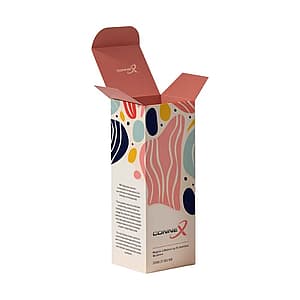
Folding cartons for wholesale and retail. This is the retail workhorse. It ships flat in a bundle, assembles in a couple of seconds with tape or glue, stacks efficiently on a shelf, and costs the least per unit of any printed structure. Add a euro hang hole or a US half-moon hang tab and it goes straight onto a boutique rail. If you sell to stores, this is your primary structure.
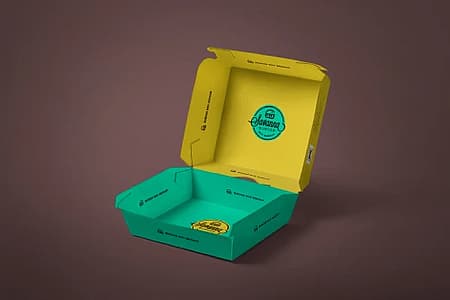
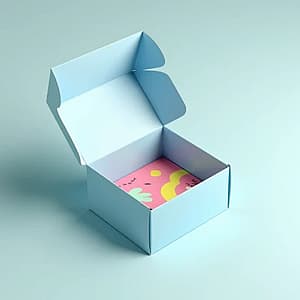
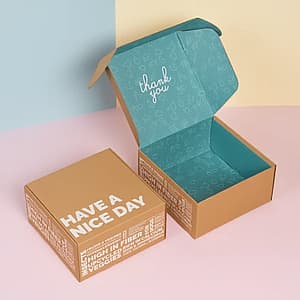
One-piece mailers for e-commerce. No assembly, no tape, no labour cost at pack time. The whole structure sits in one panel rather than being distributed between a base and a lid, so the same garment needs slightly heavier board in a mailer than it would in a carton. See our
mailer box range for the caliper mapping. Mailers also produce the best unboxing photograph because the customer sees the print before anything else.
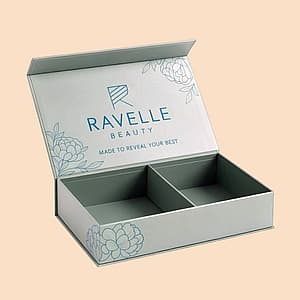
Rigid boxes for premium garments. A rigid box with a magnetic closure and a tissue wrap is the correct answer for anything priced above roughly 150 dollars, for limited drops, and for bridalwear. See
rigid boxes. The economics are defensible because you are not selling cardboard, you are justifying the garment.
Corrugated for footwear and heavy knits. Cardboard alone will not survive a parcel network carrying shoes. Use E-flute for light apparel parcels and B or C flute where the load justifies it. Our
corrugated box guide covers the ECT ratings.
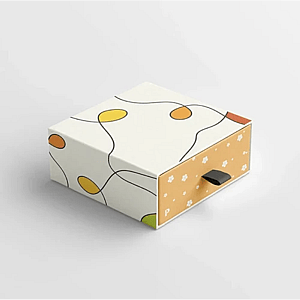
Two-piece lid-and-base separates branding from structure. The printed wrap goes on the lid and base, and you can change the lid artwork seasonally without reordering the base. It is also the easiest structure in which to print the interior, which is where care instructions and a brand message do their quiet work.
Most brands eventually run two structures from the same artwork: a folding carton for wholesale and a mailer for direct-to-consumer. That is the efficient setup, and it halves your design workload.
How to prevent creasing and shifting
Garment boxes fail in two ways, and neither of them is a board-strength problem.
Creasing comes from compression against a flat surface. Fold the garment along seams and natural fold lines rather than against the grain, orient the fold parallel to the box wall, and wrap it in acid-free tissue before it goes in. Tissue's job is to create a slip layer so the fabric never sits directly against board. Where you are shipping black, navy, burgundy, or suede, use a glassine or barrier interleaf instead, because unbuffered tissue can transfer fibre or pick up dye on dark garments.
Shifting comes from void space. A box two inches larger than the garment lets it move in transit, and moving fabric creases. Filling the void is the fix, but the fill has to hold position rather than just occupy space. Honeycomb paper wrap moulds to the garment and resists movement. A moulded pulp tray holds a pair of shoes in a fixed cavity. Loose tissue filling is the worst option because it redistributes to wherever the parcel is thrown. Card dividers, at about a millimetre of board, prevent two folded shirts from creasing into each other and cost almost nothing.
Materials and board grades for apparel
For retail folding cartons, 350 to 400 gsm uncoated or FSC-certified board is the standard. It holds a crisp edge on a shelf, takes an emboss or foil well, and resists scuffing in a stockroom.
For e-commerce parcels, E-flute corrugated at around 32 ECT handles up to about five pounds, which covers most apparel. Its large flute also gives you a wide, smooth print surface with almost no visible ribbing, which makes it the better choice for full-illustration designs than C-flute.
For rigid boxes, the structure is greyboard or chipboard wrapped in printed paper, book cloth, or textured linen. The wrap material and the closure carry the perceived quality, not the board underneath.
For anything with a sustainability claim, specify FSC chain-of-custody, soy-based or water-based inks, and plastic-free tissue. If you intend to claim compostability, every component including adhesive and window film needs to qualify. See our
kraft box guide for the certification detail.
Printing, colour matching, and artwork
Apparel brands hit a colour problem that other categories do not. Your brand colour lives on the garment, and the garment may be garment-dyed, washed, or pigment-dyed, which shifts it away from the digital swatch on your website. Send us a physical garment or fabric swatch and match the box to the textile, not to the screen. For critical brand colours, specify one or two Pantone spot inks instead of CMYK, which on uncoated board and especially on kraft will shift warm and desaturate.
Keep type above six points and line weights above half a point. Fibre content and care symbols are legally required to be legible, and they will fill in on uncoated board below that threshold.
Supply vector artwork, add three millimetres of bleed, and keep five millimetres clear of all cut lines. If you are printing the inside lid, submit it as a separate dieline file rather than a free-floating layout.
Apparel labeling and compliance requirements
This is the section most competitor pages skip, and skipping it is how brands end up with relabelled inventory.
In the United States, textile products are subject to the Textile Fiber Products Identification Act, which requires the product label to carry fibre content by percentage, the country of origin, and the identity of the manufacturer, distributor, or retailer. Care instructions for apparel sold at retail fall under the FTC Care Labeling Rule. Registered Identification numbers must appear on the product label where one has been issued to the manufacturer.
The packaging box is not strictly the labelling surface, but it is the surface that carries the information, and a box that folds over the product label can obscure it entirely. Two practical consequences for box design. First, leave a flat, unprinted compliance panel on the interior or the reverse so required information stays legible and undistorted. Second, if you ship apparel through FBA or into retail channels, the box needs a scannable barcode and an unobstructed label panel on the base.
Requirements differ by market and by whether a product is imported. Treat this as a prompt to check your own obligations with your compliance adviser, not as legal advice. What we will do is build a compliant panel into the dieline you approve.
What apparel boxes cost and where the money goes
Two line items sit on every quote. Setup, which covers the cutting die and press preparation, is a one-time cost. Board is the per-unit cost that scales with quantity. Because setup is fixed, per-unit price falls steeply as you go up in volume, and the first few hundred units are the most expensive ones you will ever buy.
The cost mistake apparel brands actually make is optimising the wrong term. They shave a few cents by dropping from 24 point to 18 point board, then lose more in damaged inventory and, far more, in dimensional weight on every parcel. For apparel, the largest single lever on total cost is not board caliper. It is internal volume and void fill.
A box sized to the garment with tissue and a tray will outperform a cheaper, larger box full of void fill on both material cost and shipping cost. Print fewer colours only after you have fixed the geometry.
How to order custom apparel boxes
- Fold and measure your garments. One size first, then decide whether you run one box or a small and a large.
- Pick structures per channel. Folding carton for wholesale, mailer for e-commerce, rigid if your price point supports it.
- Choose board grade. 350 to 400 gsm for folding cartons, E-flute for parcels, rigid wrap for premium.
- Send artwork and a garment or swatch. PDF/X, vector logos, Pantone matched to the textile.
- Approve the dieline and the compliance panel. Nothing goes to press before sign-off.
- Review a physical sample with a real garment inside it. This is the step that catches sizing and colour problems no flat proof can.
- Approve for production. Seven to ten business days for folding cartons and mailers, ten to twelve for rigid builds.
Submit your folded garment dimensions and annual volume using the quote form above and we will return a structure recommendation, a board grade, and a per-unit figure at your quantity. For complementary ranges see our
two-piece boxes,
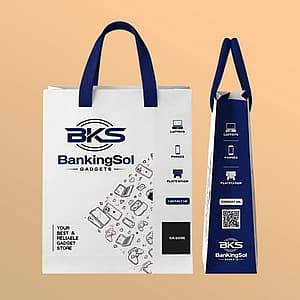
shopping bags, and
fully custom structures.