Custom rigid boxes are the premium tier of paperboard packaging — the format used when a brand wants the packaging itself to carry perceived value. Unlike a
folding carton, a rigid box is built around a solid chipboard or greyboard core, wrapped in printed paper, fabric or leatherette, and shipped fully assembled. It does not fold flat and it does not collapse. This guide covers how rigid boxes are built, which style to choose, what they actually cost, and how to order them from Thepackhive.
What Are Rigid Boxes?
A rigid box — also called a set-up box or two-piece rigid box — is a packaging structure with a rigid board core that holds its three-dimensional shape permanently. It ships assembled, arrives at your fulfilment centre ready to fill, and cannot be flattened without being destroyed.
Structurally, every rigid box has four layers:
- The core. Greyboard (also called greyboard, chipboard or pressboard), typically 1.0 mm to 3.0 mm thick, or roughly 1000–2000 gsm. This is the skeleton and the single biggest cost driver.
- The wrap. Printed paper, textured stock, fabric, PU leatherette or kraft, bonded to the core. This is the surface your customer sees.
- The finish. Lamination, varnish, foil stamping, embossing or debossing applied to the wrap.
- The closure and insert. A friction lid, magnetic closure, drawer tray, ribbon pull, plus an internal insert that holds the product in position.
What separates rigid packaging from a
mailer box or a shipping carton is permanence. A mailer box is designed to survive a courier network and then be recycled. A rigid box is designed to be kept — stored on a shelf, reused as a gift box, or left on a desk. That reusability is a measurable marketing asset, which is why rigid boxes dominate the fragrance, jewellery, spirits, watch and premium confectionery categories.
Rigid Box vs Folding Carton vs Corrugated Mailer
This is the decision most buyers get wrong, because the three formats are frequently quoted against each other by suppliers who only sell one of them. The honest comparison:
| Factor |
Rigid Box |
Folding Carton |
Corrugated Mailer |
|---|
| Core material |
Greyboard / chipboard 1.0–3.0 mm |
Single-ply SBS 14–24 pt |
Corrugated E / B / C flute |
| Ships |
Assembled (or flat if collapsible) |
Flat, self-folding |
Flat, self-locking |
| Typical MOQ |
50–500 units |
250–1,000 units |
10–100 units |
| Indicative unit cost |
$2.00–$12.00+ |
$0.20–$1.50 |
$0.35–$3.50 |
| Crush resistance |
Very high |
Low–moderate |
High (designed for impact) |
| Reusable by customer |
High |
Low |
Very low |
| Best for |
Luxury gifting, retail presentation, premium retail shelf |
Mass retail, cosmetics, pharmacy, food |
E-commerce shipping, subscription, B2B fulfilment |
The practical rule: if the box is being shipped to the customer, use a
corrugated box. If the box is being handed to the customer at a counter, in a store, or as a gift, use a rigid box. Rigid boxes are excellent presentation formats and poor shipping formats — a pre-assembled set-up box can occupy four to five times the freight volume of the same box shipped flat, which is why collapsible rigid formats exist.
Rigid Box Styles We Manufacture
There is no single "rigid box." The category splits into distinct structures, and the right one depends almost entirely on how the product is presented and how the customer opens it.
Two-Piece Rigid Box (Lid and Base)
A separate lid sits over a slightly shallower base. This is the oldest and most recognisable rigid format — the structure used for premium electronics, watches and fragrance. Maximum structural strength, no moving parts, and the largest flat printable panel on the base. Available in full-telescoping (lid overhangs the base walls) or partial-telescoping (lid fits inside the base walls) fit.
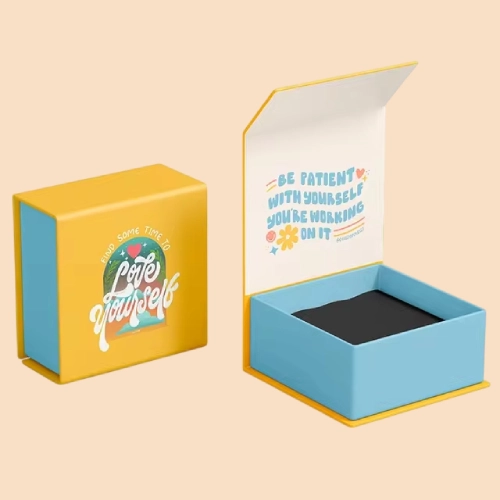
Magnetic Closure Box (Book Style)
A hinged lid that opens horizontally like a hardcover book, closed by neodymium magnets concealed beneath the wrap. Typically specified at 800–1,200 gauss. Magnetic closure boxes add roughly 15–25% to base unit cost, but they photograph and video exceptionally well — the controlled resistance and the closing click create a genuine reveal moment that performs in unboxing content. The hinge must be engineered for repeated cycles; we test to 50+ open-and-close operations before sign-off.
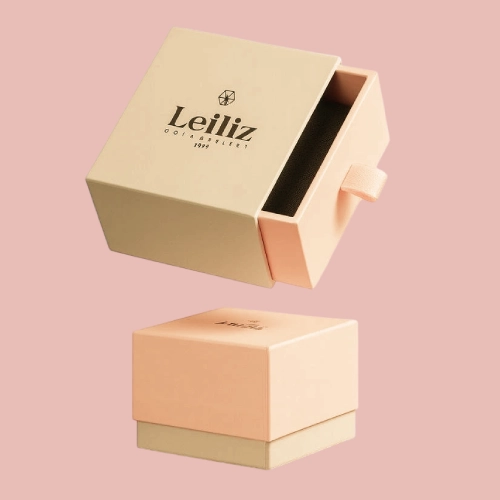
Drawer Box (Sleeve and Tray)
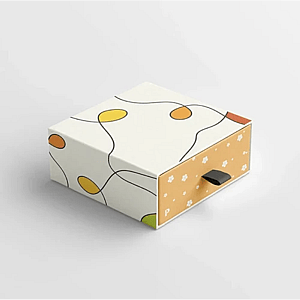
An outer sleeve with an inner tray that slides. The tray can be friction-fit or magnetic. Drawer boxes reward a slower, more deliberate opening, and customers keep them — which extends brand visibility well past the purchase. We produce these in both rigid and collapsible construction, and they are our most requested format for
candle and jewellery clients. See our slide and
drawer box range for the structural options.
Collapsible Rigid Box (Folding Rigid Box)
Identical greyboard core and exterior wrap to a set-up box, but the corners are pre-scored and supplied with adhesive so it folds flat for shipping and snaps back into shape in seconds. This solves the freight-volume problem directly: the same shipping container that holds 2,000–2,500 pre-assembled set-up boxes can hold 10,000 collapsible ones. For brands importing from overseas manufacturers or running subscription programmes, this is usually the difference between a viable and an unviable unit economics model. A well-made collapsible rigid box is visually indistinguishable from a set-up box.
Hinged Lid, Shoulder-Neck and Telescopic Boxes
A hinged lid box carries a permanently attached lid that opens to a fixed angle. A shoulder neck box adds a narrower neck panel between lid and body, giving a framed presentation of the product and the largest branding surface of any rigid format. A telescopic box uses a multi-section sliding lid that extends above the base. All three add 25–40% to base cost and all three are worth it when the box itself is the hero.
Materials & Board Thickness
Board choice controls rigidity, print quality, weight and cost simultaneously. There is no "best" board — there is only the right board for the product weight and the price point.
| Board / Wrap |
Thickness |
Best For |
|---|
| Greyboard (single-sided) |
1.0–1.5 mm / 1000–1500 gsm |
Lightweight jewellery, small accessories, sample kits |
| Greyboard (double-sided) |
1.5–2.0 mm / 1500–2000 gsm |
Standard premium specification — the industry default |
| Heavy chipboard |
2.0–3.0 mm / 2000–3000 gsm |
Premium spirits, electronics, heirloom and presentation formats |
| C1S / C2S coated paper wrap |
— |
Most cost-effective crisp colour reproduction |
| Textured / linen / cotton paper |
— |
Tactile premium positioning, boutique and heritage brands |
| PU leatherette / fabric |
— |
Jewellery and watch packaging, heirloom feel |
| Kraft wrap |
— |
Eco-positioned and sustainability-led brands |
As a manufacturing note: rigid boxes are expensive because of labour and board
weight, not print. A rigid box is largely hand-wrapped and hand-assembled, whereas a folding carton is die-cut and folded by machine. Expect a rigid box to cost 2–10× a comparable folding carton — that multiple is structural, not a margin decision.
Printing, Lamination & Luxury Finishes
Because the wrap is a curved, three-dimensional surface, rigid printing is more demanding than flat carton printing. Colour consistency across panels and around corners requires careful plate registration and proofing. We produce in CMYK offset, Pantone spot colour (including metallic and pantone-metallic), and oil-based inks for brands with tight sustainability requirements.
Available finishes:
- Soft-touch / silk lamination — a matte, fingerprint-resistant, velvet-hand surface. The most requested finish in premium packaging.
- Anti-scratch lamination — harder-wearing clear layer that prevents scuffing during transport and shelf handling.
- Spot UV — selective gloss raised above a matte field. Use it to lift a logo, a pattern, or a product name.
- Hot foil stamping — gold, silver, copper, holographic or custom metallic. Adds roughly $0.30–$0.80 per unit. Cold foil is available for short runs.
- Embossing / debossing — raised or recessed texture. Combine deboss + foil for a classic luxury mark.
- Matte, gloss and aqueous coatings — standard protective sealing.
Inserts & Interior Design
A rigid box without an insert is half a product. The insert is what stops the item moving, and it is the first thing a customer touches after the lid opens. Options, in ascending order of cost and protection:
- Die-cut paperboard insert — cheapest, recyclable, suitable for light goods and multi-item arrangements.
- Moulded pulp insert — fully recyclable and increasingly specified by sustainability-led brands; excellent for bottles and cylindrical products.
- EVA foam insert — the workhorse precision-cut option for fragile electronics, glass and cosmetics. Highest protection, lowest recyclability.
- Velvet or satin-lined tray — the jewellery and watch specification.
- Compartments and ribbon pull elements — functional add-ons for multi-SKU gift sets.
How Much Do Custom Rigid Boxes Cost?
We publish this because opaque packaging pricing is the single most common complaint in this category. Rigid box cost is driven by five variables: box size, board weight, finishes, insert type, and — decisively — order quantity.
Indicative unit pricing by order volume (factory-direct, US manufacture, standard 1.5 mm greyboard, C1S wrap, spot UV or foil, moulded pulp insert):
These are the ranges we see across our standard structural set. Quote them before quoting anyone else — a supplier quoting $0.10 per rigid box is quoting a folding carton.
Where the money actually goes. For a representative 150 × 100 × 60 mm cosmetic box with soft-touch lamination, two-colour print, foil stamping and a foam insert, targeting a landed unit cost of roughly $6.00:
| Cost Component |
Share |
Example (per unit) |
|---|
| Board and wrap material |
30% |
$1.80 |
| Printing and inks |
20% |
$1.20 |
| Insert (foam / moulded pulp) |
15% |
$0.90 |
| Finishing (lamination, foil, varnish) |
15% |
$0.90 |
| Tooling and setup, amortised |
10% |
$0.60 |
| Assembly, packing and handling |
10% |
$0.60 |
Three levers reduce cost without visibly reducing quality: increase order quantity (amortises the tooling — the single biggest lever, typically 30–40% off per unit per doubling), substitute C1S wrap for textured or fabric, and specify a moulded pulp insert instead of EVA foam. Conversely, expect foil stamping to add $0.30–$0.80 and a magnetic closure to add 15–25%.
Rigid Box MOQ & Lead Time
Our minimum order quantity for custom rigid boxes is 50 units, with no upper limit. Rigid is unusually well suited to small runs because a rigid box does not require offset printing plates in the way a folding carton does — the wrap can be digitally printed, which removes the plate cost entirely at low volume.
Standard production is 15–18 business days after proof approval, plus transit. Rush production is available on request. If you are ordering 100 boxes in three different colourways, that is a 300-unit production run — the factory counts the run, not the SKUs, so you can hit MOQ and still offer variety.
Industries & Product Applications
Rigid packaging performs differently depending on product weight, fragility and retail channel. The formats our clients order most often:
- Jewellery and watches — drawer or hinged box, velvet or satin tray, debossed logo. Highest perceived-value category.
- Cosmetics and fragrance — magnetic closure or two-piece, moulded pulp or foam insert, spot UV. Our most consistent volume category.
- Candles and home fragrance — drawer box, kraft or textured wrap. Also see our dedicated candle box range.
- Electronics and accessories — heavy 2.0–3.0 mm board, EVA foam insert, anti-scratch lamination.
- Premium apparel — collapsible rigid for shipping efficiency, or drawer box for premium lines. See apparel boxes.
- CBD and wellness — compliant, low-odour board, discreet design. See CBD box packaging.
- Corporate gifting and PR kits — multi-compartment, ribbon-pull drawer boxes. See our branded essentials range.
- Subscription programmes — collapsible rigid, optimised for fulfilment cost per unit shipped.
Sustainability & Compliance
Rigid packaging is fully recyclable in standard paper streams provided the
construction is mono-material — which means paper wrap, paper core, water-based adhesives and a paper or pulp insert. The two exceptions worth planning for are EVA foam inserts and magnetic components, both of which must be separated before recycling.
Where recycled content is required, specify FSC-certified board. If you supply into the European market, note that the EU Packaging and Packaging Waste Regulation (PPWR) takes effect through 2026 and sets recyclability requirements for packaging placed on the EU market from 2030. Mono-material, plastic-free constructions are the safest long-term position and are worth specifying now rather than re-engineering later.
For food-contact applications, inks and coatings must comply with
US FDA food contact substance requirements. Ask us for the compliance statement covering your specific structure and print process.
How to Order Custom Rigid Boxes
- Choose your structure and dimensions. Send the product dimensions and weight. If you are unsure which structure suits, ask — this is a free consultation and it is the step most worth getting right.
- Upload artwork, or request a free layout. Preferred formats are vector (AI, EPS, PDF), CMYK colour mode, text converted to outlines, images at 300 DPI minimum, with 3 mm bleed. We will preflight and flag alignment, bleed and trapping issues before proofing — this routinely prevents costly reprints.
- Select print, finish and insert. CMYK or Pantone, soft-touch or anti-scratch lamination, foil, spot UV, emboss, and the insert specification.
- Approve the digital proof. Production begins only after written proof approval.
Standard production is 15–18 business days after proof approval, with worldwide shipping available. Request a free quote — we respond with a firm price, usually within four business hours.
Why Choose Thepackhive for Rigid Packaging
We have been in printing and packaging for more than 25 years, and rigid boxes are one of our core manufacturing formats rather than a product we resell. That distinction matters: we control board sourcing, wrapping, assembly and finishing in-house, which is why we can quote a 50-unit MOQ and a 10-day lead time on a structure most competitors will not run below 250 units.
Specifically for rigid box clients:
- Low MOQ of 50 units with no upper order limit and volume tiers that reward repeat runs.
- In-house structural engineering — we produce CAD dielines rather than adapting a generic template to your product.
- Full finishing range in-house — soft-touch, anti-scratch lamination, hot and cold foil, spot UV, emboss and deboss, edge painting and turned-edge work.
- Hinge and magnet testing to 50+ open-and-close cycles before production sign-off.
- Free design consultation and preflight before proofing.
- Worldwide shipping with expedited options.
Explore Related Packaging Formats
Not sure rigid is the right fit? Compare the formats we manufacture most:
More general answers about ordering, materials and shipping are on our
packaging FAQs page. If you would like to talk through a specific structure, request a free quote or read more about Thepackhive.